Written by Joey Augustin on February 21, 2026
If you want to build an online business and work for yourself, you have to write.
There’s no way around it.
Behind every video you watch, every article you read, and every sales page you visit, someone had to take the time to write.
If you are hoping to run a solo business online, that someone is you.
Writing can feel like a chore, and too many chores leads to burnout. Especially for overthinkers (like me).
That’s why I came up with the Topic-Format-Value formula.
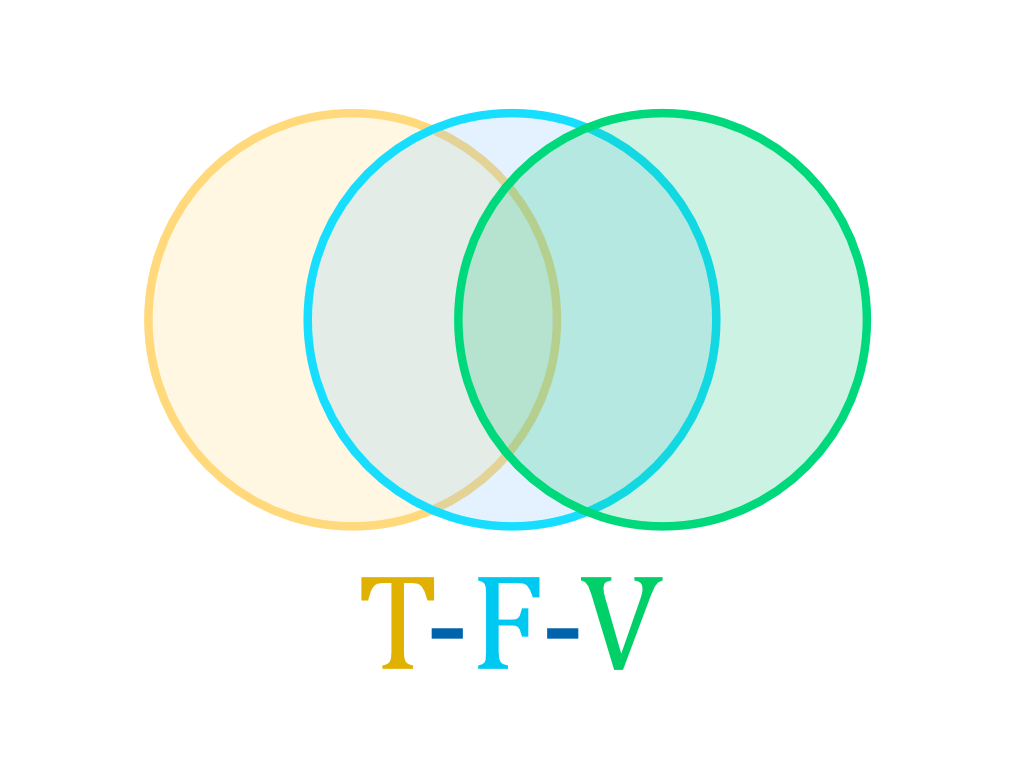
It’s a simple 3 cue system to help prompt your writing and instantly gain momentum to write consistently.
The 3 Cues of Writing Consistently as a Solopreneur (TFV Formula)
- Topic - Just the “stuff” to write about. Think of these as “nouns” or “keywords”. These are the main subjects of your articles.
- Format - The “structure” of your article. How you will present your topic.
- Value Factor - The “why” behind your article. This is the value factor that gives people a reason to click and read your article.
Topics
Topics are endless. As endless as the dictionary.
These topics should be thought of as keywords, which have the added benefit of being found through search (think Google, YouTube, etc). For example:
- Horror Movies
- Japan Travel
- Roth IRAs
- Public Speaking
How do you choose your topics?
Think about the people you want to serve, and the areas where you have either experience and knowledge, or a growing interest where you are actively learning.
Sticking to just a few main topics across all your writing will help both your readers and search engines understand what you are all about.
I highly recommend sticking to 3-5 main topic keywords, that will be included in most of your article and video titles (if you also have a YouTube channel).
Formats
Article formats are probably less familiar to most new to writing. Here are a few of my favorites:
- Listicles (ex: Top 10 Horror Movies from 1990 - 2010)
- How Tos (ex: How to plan a trip to Japan)
- Comparison (ex: Roth IRA vs 401K)
- Personal Story (ex: How I overcame my fear of public speaking)
These are just a few examples of article formats. There are many more out there, and you can even create your own unique formats.
Notice how we took the topics, or keywords, and added them to the article format to create a simple title for an article.
With just these 5 formats, you could write 5 articles on each of your 3-5 main topics every week for years without running out of ideas.
At this stage, it might be tempting to dive deep into the world of keyword research and SEO, but I would recommend against it.
I have found that keyword research tools have large data inaccuracies, and they can lead you down a rabbit hole of analysis paralysis.
While you might not rank organically for a keyword right away, you can still get traffic from sharing your article on social media and online communities.
Best of all, you can repurpose your content across platforms. For example, you can turn an article into a YouTube video (which is my favorite platform for solopreneurs).
This alone should help you get started with plenty of article ideas, but there is one more ingredient that will greatly increase intentional clicks.
You need an attention factor.
Value Factors
Value factors give people a reason to read. It makes them feel seen and understood. It speaks to their unique situation, needs, or problems.
“How tos” are the most straightforward, but you can still add an value factor to them. For example, “How to Plan a Trip to Japan on a Shoestring Budget” really speaks to people who are trying to enjoy Japan on a limited budget.
The readers who are itching to see Mt. Fuji but have limited money, will read this well before any generic Japan travel article.
Here are more examples from our previous article topics and formats with value factors added:
- Top 10 Horror Movies from 1990 - 2010 (for Stephen King Fans)
- How to plan a trip to Japan on a Shoestring Budget
- Roth IRA vs 401K for Full Time Freelancers
- How I overcame my fear of public speaking in 30 Days (Day-by-Day Breakdown)
Every reader has an agenda. They are looking for something specific to address their needs, solve their problems, or speak to their unique situation.
Capture Your Thoughts, Don’t Edit
Once you come up with your idea using the TFV formula, the writing process begins with bullet points.
Just create an outline. That’s it. You don’t have to write full sentences, you just need to get the main points down on paper.
Do not edit anything at this point. Just get the ideas out.
Getting the ideas and thoughts out is what creates momentum.
That’s the whole reason I created the TFV formula for myself. I’d often get too stuck into thinking about:
- “Does this fit into my overall content strategy?”
- “Is there any SEO value to this topic?”
- “What are readers and viewers looking for in this topic?”
- “How do I even come up with a title?”
While all of these questions have importance, they are obstacles to getting started. They are the “overthinking” that leads to procrastination and burnout.